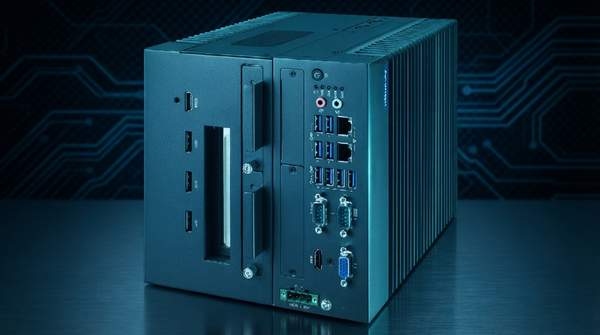
Hon Hai Technology Group (Foxconn) and Intel are strategically collaborating to define next-generation platform architectures for agentic AI, edge intelligence, and robotics. This partnership marks a significant industry pivot towards machines that perceive and act in the physical world, solidifying investment in foundational physical AI technology. Such collaborations are crucial for developing the infrastructure supporting complex real-world automation.
Physical AI promises machines autonomous action in dynamic real-world environments. However, current systems often remain limited to site-specific understanding, creating a critical operational gap for broader deployment. The disparity between current systems' site-specific understanding and the need for broader deployment underscores the challenge of transitioning AI from controlled digital spaces to unpredictable physical interactions.
Companies are investing heavily in foundational hardware and software to overcome these limitations. While widespread generalist physical AI remains nascent, its foundational infrastructure is rapidly being built. The focus centers on creating systems capable of more adaptable and generalized spatial intelligence.
What is Physical AI?
Physical AI perceives dynamic environments via sensors and spatial data, interprets observations in real time, and acts by navigating, coordinating, responding, and adapting, according to Niantic Spatial. This enables AI systems to engage directly with the physical world, moving beyond purely digital tasks. Unlike traditional AI, which processes information, physical AI exerts influence and interacts with its surroundings.
Bridging digital and physical worlds fundamentally distinguishes physical AI from purely software-based AI. This involves complex interactions, from robotic arms performing assembly to autonomous vehicles navigating traffic. Such integration of perception, interpretation, and action within a physical context defines its core utility.
How is Physical AI Developed and Trained?
Training physical AI behaviors often involves building simulated environments and practicing thousands of scenarios before real-world trials, as reported by Coursiv. This approach enables developers to test and refine AI responses in controlled, safe settings. Iterative simulation and refinement mitigate risks associated with physical interaction.
The complexity and safety requirements inherent in developing AI for physical interaction are underscored by extensive simulation. Developers must account for countless environmental variables, from unexpected obstacles to changing lighting conditions. This intensive training ensures reliable and safe system operation, yet it also presents a significant barrier to entry due to the specialized expertise and computational resources required for robust simulation environments.
The Current Limitations and Future of Physical AI
Most physical AI systems operate at a site-scale, understanding only environments they have been explicitly trained on, a critical operational gap for deployments spanning larger or changing areas, states Niantic Spatial. This limitation means an AI trained for one factory floor cannot immediately operate effectively in another without significant re-training. Compounding this, benchmarks are grouped into subcategories to allow testing of more narrowly focused 'generalist' AI agents, according to arXiv. The segmentation in testing methodologies, even for agents labeled 'generalist,' confirms that true broad spatial intelligence remains a distant goal, highlighting the fundamental challenge of generalization.
Overcoming these site-specific limitations and developing robust benchmarks for truly generalist agents are crucial steps for physical AI to achieve broader real-world utility. Companies like Foxconn and Intel are placing massive bets on physical AI's future, investing in custom silicon and next-gen architectures (鴻海科技集團). However, the technology's current inability to generalize beyond site-specific training mandates that early adopters prepare for significant upfront investment in highly specialized, non-transferable solutions.
Why Physical AI Matters: Industry Impact and Adoption
Physical AI adoption will concentrate in high-value sectors, with the automotive industry projected to lead, according to Strategy&. The concentration of Physical AI adoption in high-value sectors, with the automotive industry projected to lead, indicates where the technology currently delivers the most significant return on investment. Deployment complexity and cost make it practical only for applications demanding precision and high efficiency.
The concentration in high-value sectors like automotive transcends mere market opportunity. It starkly indicates that current training and deployment costs (Coursiv, Niantic Spatial) render these systems economically viable only where ROI is exceptionally high, leaving most industries years from practical adoption. The fact that current training and deployment costs (Coursiv, Niantic Spatial) render these systems economically viable only where ROI is exceptionally high, leaving most industries years from practical adoption, limits immediate widespread integration but highlights significant future potential.
Who is Building Physical AI?
What are the core principles of physical AI?
Core principles of physical AI involve perceiving, interpreting, and acting autonomously within dynamic physical environments. This encompasses understanding spatial relationships, anticipating changes, and executing complex motor tasks. It differentiates from purely digital AI through direct interaction with the tangible world.
How does physical AI differ from symbolic AI?
Physical AI differs from symbolic AI primarily in operational mode and interaction. Symbolic AI relies on explicit rules and knowledge representation for abstract or logical problem-solving. Physical AI, conversely, focuses on real-time sensory input and motor output to navigate and manipulate the physical world, demanding continuous adaptation to environmental changes.
What are some real-world applications of physical AI in 2026?
By 2026, real-world physical AI applications concentrate in autonomous vehicles, where AI perceives road conditions and controls driving, and advanced manufacturing robotics. Deployments also extend to logistics for automated warehouse operations and healthcare for precision surgery assistance. The 鴻海科技集團 and Intel collaboration, for example, explores custom ASICs and SoCs to accelerate these applications across silicon, rack, system, and application layers, indicating a hardware-centric approach to scaling.
The Future is Physical
If foundational hardware and simulation techniques continue to advance, site-specific physical AI deployments will likely see incremental improvements by Q4 2026, particularly within controlled manufacturing environments, but broad generalist spatial intelligence remains a long-term challenge.