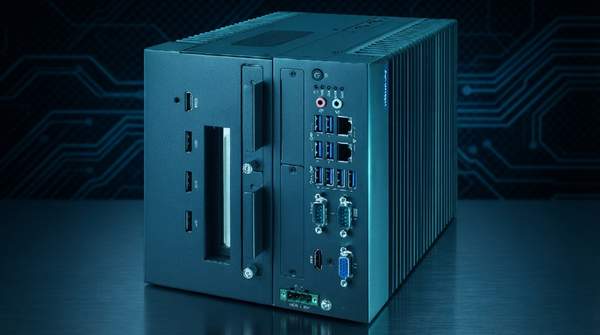
For most industrial AI deployments, the architecture decision reduces to one question: does your application need to compute locally, or just forward data onward? A standard industrial IoT gateway handles data pass-through, protocol conversion, and remote metering with low-power ARM cores and 512MB–4GB of RAM, tolerating response latencies measured in seconds. Real-time AI workloads—vision inspection, machine learning inference, robotics—demand a high-performance edge gateway with multi-core x86 or ARM processors, optional GPUs, 8GB–64GB of RAM, and millisecond-scale local processing. Getting this mapping wrong in either direction means over-provisioning hardware budgets or under-provisioning compute, a trade-off that an industrial gateway selection guide from EVOC makes explicit.
Edge, Fog, and Cloud: Defining the Industrial Computing Landscape
Before choosing hardware, place it in the right architectural layer. Scale Computing's comparison of edge, fog, and cloud models locates edge processing on or near the device, at the site itself—a plant floor, a store, a branch. Fog computing sits between edge and cloud, running across gateways, regional nodes, and micro data centers. Cloud computing centralizes processing in a provider's or enterprise's data center.
Latency follows that geography. Edge offers the lowest latency and supports real-time response; fog delivers low-to-moderate latency depending on where fog nodes are placed; cloud latency is highest and depends on WAN distance and region. The same comparison assigns each layer its ideal use cases: edge suits POS and retail apps, local control systems, video analytics, and IoT response; fog handles aggregation, filtering, and regional coordination across many edge devices; cloud fits big-data analytics, centralized applications, model training, and global services.
For an industrial architect, that division of labor matters. A smart city deployment might run vision analytics at the edge, aggregate and filter sensor streams across a fog layer, and reserve the cloud for training the models that edge nodes later run. Security posture also shifts by layer: Scale Computing notes edge requires consistent patching and policy enforcement, fog adds more endpoints and layers to secure, and cloud relies on mature centralized controls under a shared-responsibility model.
Standard vs. High-Performance Edge Gateways: Hardware for Industrial AI
Within the edge layer, the practical hardware choice is between two gateway classes. EVOC's selection guide distinguishes a standard industrial IoT gateway from a high-performance edge gateway along six dimensions, and the differences compound quickly.
The standard gateway's primary objective is data pass-through, protocol conversion, and basic buffering. It runs low-power ARM or RISC cores with 512MB–4GB of RAM and eMMC storage, fixed firmware or a basic Linux/RTOS stack, and response latency measured in seconds—dependent on cloud round-trips. Typical deployments are remote metering and environmental sensing.
The high-performance edge gateway is built for localized compute, real-time analytics, AI, and OT control. Its processor architecture is high-throughput ARM or x86 multi-core CPUs; memory and storage scale to 8GB–64GB of RAM with high-speed NVMe SSDs. Software capability extends to Docker, Kubernetes, Linux, Windows 10 IoT, and AI frameworks. Because processing happens locally at the edge, response latency drops to milliseconds. Typical deployments include vision inspection, machine learning, robotics, and SCADA systems.
The guide's framing is worth internalizing: the terms are often used interchangeably, but understanding the distinction is what prevents over-provisioning hardware budgets or under-provisioning compute capabilities. A gateway that only forwards telemetry does not need GPU-class hardware; a machine-vision cell does not survive on a low-power ARM core.
Performance Considerations for Mobile AI and Robotics
Latency figures on a spec sheet assume a quiet network. Research on edge-versus-cloud trade-offs, published as a preprint on arXiv, complicates the picture for mobile applications such as autonomous robotics in smart cities or factories. The authors report that recent work showed the resource constraints of the edge can result in higher end-to-end latency under medium to high utilization, due to higher queuing delays.
That finding matters for exactly the workloads that push architects toward high-performance gateways. A robot or autonomous vehicle moving through a MEC-enabled 5G environment does not present a stationary, predictable load; the paper's authors note that modeling edge-versus-cloud trade-offs in the presence of mobility had not been addressed in prior work, and that understanding these costs is important for network designers now that the architecture is adopted into 5G-and-beyond networks as Multi-access Edge Computing.
The practical takeaway for planning: an edge gateway sized to average load may still miss latency targets at peak utilization, because queuing at a constrained edge node can erase the latency advantage that motivated the edge deployment in the first place. For mobile AI workloads, utilization headroom is part of the latency budget, not an optional extra.
Industrial Edge Gateway Selection Matrix
Use this matrix to classify your application by its primary objective and latency requirement, then read across to the appropriate gateway class. The rows synthesize EVOC's gateway comparison with Scale Computing's architectural model.
| Application profile | Primary objective | Latency requirement | Appropriate hardware class |
|---|---|---|---|
| Remote metering, environmental sensing | Data pass-through, protocol conversion, basic buffering | Seconds; cloud round-trip acceptable | Standard IIoT gateway (low-power ARM/RISC, 512MB–4GB RAM, eMMC) |
| Aggregation and filtering across many edge devices | Regional coordination and pre-processing | Low to moderate; depends on fog node placement | Fog-layer gateways and regional nodes between edge and cloud |
| Vision inspection, machine learning inference, robotics, SCADA | Localized compute, real-time analytics, AI, OT control | Milliseconds; processed locally at the edge | High-performance edge gateway (multi-core ARM/x86, 8GB–64GB RAM, NVMe, container/AI framework support) |
| Model training, big-data analytics, global services | Centralized heavy computation | Highest; WAN- and region-dependent | Cloud, feeding trained models back to edge gateways |
The classification logic is straightforward. First ask whether the application computes locally or forwards data: forwarding points to the standard gateway, local analytics to the high-performance class. Then check the latency requirement: second-scale tolerance fits the standard gateway's cloud-dependent round-trips, while millisecond-scale response requires local processing. Finally, for mobile workloads, add utilization headroom to the chosen class, since queuing delays at a constrained edge node can push end-to-end latency back up under medium-to-high load.
Making the Right Choice for Your Industrial AI Deployment
IoT architects should select a standard IIoT gateway for applications primarily focused on data acquisition and forwarding with moderate latency tolerance, and a high-performance edge gateway for applications requiring real-time AI inference, complex analytics, and ultra-low latency. The measurable indicator of a correct choice is the successful deployment and sustained performance of the chosen gateway class, evidenced by meeting application-specific latency targets and processing throughput for industrial AI workloads.
That indicator is testable before and after rollout. Define the latency target in milliseconds for each AI workload, measure it under realistic peak utilization—not just idle conditions—and confirm the deployed gateway sustains it. For mobile applications, re-measure while devices move, since the arXiv analysis identifies mobility and queuing behavior as the dimensions where edge deployments most often diverge from their specification-sheet promises.
Robustel's 2026 industrial architecture guide, authored by Jerry Huang, captures the stakes from the field: engineers who "tried to build their first massive IIoT project by streaming everything to the cloud" and "waited for the 'big data' magic to happen" are the cautionary case. The architecture decision—edge, fog, or cloud, and standard or high-performance hardware at each layer—determines whether the latency target is met before the first sensor is installed.
Sources
- Industrial IoT Gateway Selection Guide: Everything You Need to Know — Evocipc
- Edge vs. Fog vs. Cloud: The Modern IT Solution Explained — Scale Computing
- Modeling Tradeoffs between mobility, cost, and performance in Edge Computing — ARXIV
- What is Edge Computing in IoT? The 2026 Industrial Architecture Guide — Robustel