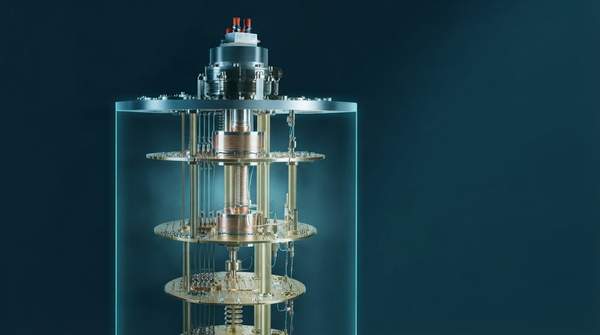
Quantum machine learning (QML) aims to speed up specific machine learning tasks by running computations on quantum hardware, where superposition, entanglement, and interference replace the bits and neurons of classical systems. The promise is real but conditional: a research review by Cerezo and colleagues identifies clear pathways toward quantum advantage while acknowledging significant technical challenges, particularly around trainability and noise. For enterprises, the practical takeaway is that QML remains an emerging field whose advantages are theoretical, gated by three named problems—data loading, hardware noise, and algorithm trainability.
Introduction to Quantum Machine Learning
QML merges quantum computing's processing power with artificial intelligence to solve complex data problems, as the quantum computing company QuEra explains in its technical glossary. The core idea is dimensional: quantum computers naturally map data into massive multidimensional spaces—Hilbert spaces—potentially uncovering patterns invisible to classical neural networks. Most current QML does not run entirely on quantum chips. Instead, it relies on hybrid loops in which a classical computer optimizes the parameters of a quantum circuit, an approach known as variational algorithms. The dominant model architecture is the Quantum Neural Network, implemented as parameterized quantum circuits whose adjustable gates are trained analogously to weights in classical neural networks, according to the Cerezo et al. review.
How QML Leverages Quantum Phenomena
The mechanism that distinguishes QML from classical machine learning is the quantum feature map. Classical computers that need to find non-linear patterns often must project data into higher dimensions mathematically, which becomes computationally expensive—the "curse of dimensionality." Quantum systems instead map data directly into the quantum states of qubits, where the representation natively exists in an exponentially large Hilbert space. Because QML algorithms operate in this vast space, they can potentially identify correlations—via entanglement—that a classical computer would miss entirely.
IonQ, a quantum hardware developer, describes the practical consequence: quantum models tap into probabilistic models that are non-classical in nature, can efficiently classify complex yet condensed datasets, and are capable of revealing correlations that are hard, if not impossible, to identify using classical models. Kernel evaluation, which is computationally expensive at high dimensions classically, can become efficient through quantum interference. The table below maps each phenomenon to its computational role.
Mapping Quantum Principles to QML Functions
The framework below connects each quantum effect to what it actually does inside a QML algorithm, and what benefit that produces relative to a classical approach. Reading it row by row shows why QML is not merely classical machine learning on faster hardware: each phenomenon contributes a function classical systems must simulate at great cost, or cannot reproduce at all.
| Quantum Phenomenon | Role in QML Algorithm | Computational Benefit |
|---|---|---|
| Superposition | Encodes data across many qubit states at once, enabling massive parallelism in the quantum feature map | Explores many candidate solutions simultaneously, which can lead to exponential speedups for certain computational tasks |
| Entanglement | Links the states of multiple qubits, even when physically separated, creating complex non-classical correlations | Enables detection of intricate correlations in high-dimensional data that classical models can miss |
| Quantum Interference | Amplifies correct computational paths and cancels out incorrect ones | Directs the quantum system toward desired outcomes, a fundamental mechanism for extracting useful results and crucial to algorithms like Grover's search |
Interference deserves particular emphasis because it is the step that converts quantum parallelism into an answer. Superposition alone explores many states; interference is what makes wrong answers cancel and right answers survive measurement, which is why the Cerezo review treats it as fundamental to achieving quantum advantage.
Challenge 1: Data Loading Bottlenecks
The first barrier sits at the boundary between classical and quantum: getting data in. Real-world datasets are classical, and loading them into quantum states can consume so much time and circuit depth that it erases any speedup the quantum phase delivers. QuEra's glossary lists this "input bottleneck" among the field's key limitations. The problem is structural—encoding n classical data points may require resources that grow with the dataset, so a fast quantum kernel evaluation can be preceded by a slow preparation step. The Cerezo et al. review's pipeline view places data encoding among the common challenges alongside noise and optimization failures. Researchers are pursuing more efficient encoding methods, but until data can be loaded cheaply, the theoretical speedups of QML algorithms remain difficult to realize on enterprise-scale datasets.
Challenge 2: Hardware Noise and Decoherence
The second barrier is the hardware itself. Today's quantum processors are noisy, small, and prone to decoherence—qubits lose their delicate quantum states as they interact with the environment. QuEra identifies noise as a core limitation, and the Cerezo review's pipeline diagram explicitly includes "noise corruption" as a recurring challenge across the QML workflow. Noise matters doubly in machine learning: it degrades individual computations, and because variational algorithms train circuits over many iterations, small errors accumulate into unreliable model outputs. This is why progress in quantum error correction is widely treated as the gating technology for the field. The review distinguishes the current NISQ era—noisy intermediate-scale quantum devices—from a future fault-tolerant era in which errors can be corrected rather than merely tolerated. Until that transition, QML demonstrations are confined to small problems where noise does not overwhelm the computation.
Challenge 3: Algorithm Trainability and Barren Plateaus
The third barrier is the hardest to visualize: training a quantum neural network can be mathematically intractable. The Cerezo review highlights barren plateaus—regions in the parameter landscape where gradients vanish, making optimization stall—as a defining trainability problem, alongside local minima. When a landscape is barren, the classical optimizer in the hybrid loop receives no useful signal about which direction to adjust the circuit's parameters. The review points to quantum-aware optimization strategies that show promise: parameter-shift rules for exact gradient computation, quantum natural gradients that incorporate quantum geometry into optimization, and specialized variational techniques. It also emphasizes the importance of inductive bias in circuit design—building in symmetries, problem-specific ansätze, and hierarchical multi-scale feature extraction—so that the architecture itself constrains the search space before training begins.
Current State of Research and Future Outlook
The honest summary is that robust QML models remain theoretical, as IonQ itself concedes, even as the field's research agenda is concrete. The Cerezo review offers a balanced assessment: significant technical challenges around trainability and noise exist, but the authors demonstrate clear pathways toward quantum advantage, especially for quantum-native applications. Their long-term vision for the fault-tolerant era includes direct quantum data transduction from natural quantum systems, quantum networks for distributed machine learning, and quantum machine perception integrated into everyday technology. In the near term, the hybrid variational approach remains the working method, with research focused on better encodings, noise mitigation, and trainable circuit designs.
Navigating the Path to Practical QML Adoption
Enterprises considering Quantum Machine Learning should focus on understanding the specific technical challenges—data loading, hardware noise, and algorithm trainability—and monitor advancements in these areas before committing to widespread practical implementation. The three barriers are not vague obstacles; each has named research programs attached, which makes the field's progress measurable rather than speculative. A realistic assessment today treats QML as a watch-and-evaluate opportunity: the quantum feature map and interference-based kernel evaluation are genuinely different computational resources, but their advantages are theoretical until the surrounding bottlenecks are solved.
The measurable indicator to track is progress in quantum error correction, development of efficient quantum RAM, and demonstrations of QML algorithms overcoming barren plateaus in real-world datasets. When those three milestones start appearing together—error-corrected hardware, cheap data loading, and trainable models on genuine enterprise data—the gap between QML's theoretical speedups and practical deployment will begin to close.