
Ai Architecture
7 articles

Code for Rules, Models for Judgment: How to Cut Generative AI Costs at the Source
The primary strategy for reducing generative AI costs involves evaluating each task to determine if it can be handled by deterministic code rather than a model call. By reserving models for tasks requiring judgment and using code for rule-based operations, organizations can significantly cut expenses and improve performance.

Centralized vs. Distributed Agentic AI: How Enterprise Architects Should Choose
Enterprise architects must choose between centralized (hierarchical) and distributed (collaborative) agentic AI architectures based on workflow complexity, governance needs, and scalability requirements. The decision hinges on trade-offs between control, flexibility, and operational overhead, with implicit choices leading to fragile systems.
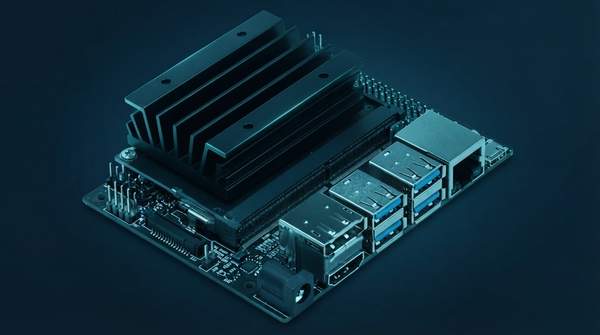
Edge AI vs. Cloud AI for IoT: How to Pick the Right Architecture for Your Deployment
Choosing the right AI architecture for your IoT deployment—Edge, Cloud, or Hybrid—hinges on critical factors like required response speed, network reliability, data sensitivity, scalability needs, and cost structure. Understanding these trade-offs is key to selecting the architecture that best aligns with your application's specific demands.

On-Device or Cloud-Tethered: Choosing an Agentic AI Architecture for Embedded Systems
Deploying agentic AI on embedded systems requires choosing between an autonomous on-device architecture or a cloud-tethered model. The optimal choice hinges on critical project constraints like latency, connectivity, power, privacy, and update frequency.

Recursive Agent Harnesses: When Spawning Full Agents Beats Simple Model Recursion
Recursive Agent Harnesses (RAH) is an architectural pattern where parent agents spawn full, tool-augmented child agent harnesses instead of simple model calls. This approach scales fine-grained reasoning for complex tasks that split into independent subtasks with cheap verification signals, justifying higher token costs.

What Is the Future of LLMs Architecture in 2026?
Scientific researchers find that large language models (LLMs) generate more specific, actionable future work suggestions than human authors often provide.

New Research Finds AI Power Driven by Specialization and Cooperation, Not Just Scale
A new study challenges the "bigger is better" mantra in AI, revealing that the emergent power of artificial intelligence comes from the specialized roles and cooperative interaction of its internal parts, not simply its size.