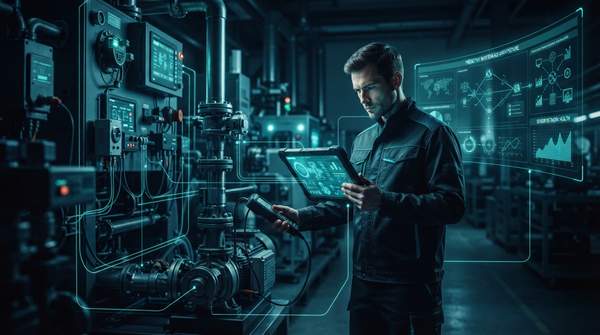
A major automotive manufacturer reduced warranty claims by 15% in one year by using digital twins integrated with AI to predict component failures, according to a Tech Insights Report. This foresight enabled proactive maintenance, preventing costly breakdowns. Similarly, Singapore's smart city initiative uses digital twins to simulate traffic and energy, cutting peak-hour congestion by 10%, as reported by Urban Tech Review. Digital Twin platforms promise unparalleled operational insights by integrating AI and IoT, but their complexity and data demands often hinder widespread adoption beyond early innovators. While long-term benefits are transformative, companies face significant technical and organizational hurdles, suggesting a bifurcated future for adopters.
Beyond the Buzzword: What Are Integrated Digital Twins?
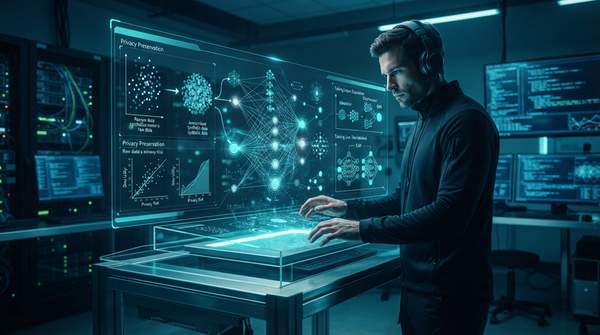
Digital Twins are virtual replicas of physical assets, processes, or systems, continuously updated with real-time data, explains Gartner. IoT sensors provide real-time data streams like temperature or vibration, feeding the digital twin model, notes IEEE Spectrum. AI algorithms analyze these datasets, enabling predictive analytics and autonomous decision-making, according to MIT Technology Review. This integration forms a closed-loop system: physical changes reflect virtually, AI analyzes them, and insights optimize the physical asset, as detailed by Deloitte. The true power lies in this seamless interplay, creating a dynamic, intelligent replica of the physical world.
The Engine Room: How AI and IoT Supercharge Digital Twins
Edge computing processes IoT data closer to the source, reducing latency for real-time digital twin updates, states IDC. This local processing synchronizes the digital twin with its physical counterpart, enabling immediate responses. Machine learning models within the AI layer learn from digital twin data to predict future states, highlighted by IBM Research. Cloud platforms provide scalable infrastructure for storing and analyzing the massive data generated, as outlined in an AWS Whitepaper. This transforms static models into living, predictive systems. Companies prioritizing short-term cost avoidance, with 60% citing high initial investment as a barrier (Gartner), forfeit substantial long-term gains like the 15% warranty claim reduction seen by automotive manufacturers.
Real-World Impact: Where Integrated Digital Twins Deliver Value
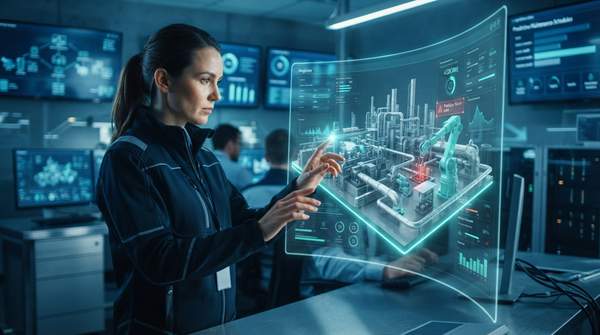
In manufacturing, digital twins with AI predict equipment failures, reducing unplanned downtime by up to 30%, according to McKinsey. Reducing unplanned downtime by up to 30% translates to operational savings and increased output. Healthcare providers use digital twins of organs to simulate drug responses and surgical procedures, personalizing treatment, as detailed in Mayo Clinic Proceedings. These examples prove integration drives measurable improvements. Despite quantifiable benefits like 20% operational efficiency gains (Deloitte) and 95% predictive accuracy (Siemens), only 15% of large enterprises have moved beyond pilot projects, states IDC Research. Only 15% of large enterprises have moved beyond pilot projects, indicating implementation costs and difficulties outweigh proven benefits for most potential adopters.
Navigating the Future: Common Questions and Challenges
What are the challenges of digital twin integration in 2026?
Interoperability between disparate IoT devices, legacy systems, and digital twin platforms remains a challenge, highlighted by the Open Industry 4.0 Alliance. Data security and privacy are paramount, as integrated digital twins process sensitive operational data, according to an ENISA Report. Regulatory frameworks for ethical implications and data governance are still evolving, notes the European Commission. Addressing these foundational issues is critical for widespread, secure deployment.
Is the talent gap a significant barrier to digital twin adoption?
Yes. Skilled personnel in IoT, AI, and domain-specific knowledge are crucial but scarce, reports the World Economic Forum. The global talent shortage of skilled personnel in IoT, AI, and domain-specific knowledge limits organizations' ability to unlock the technology's predictive power. The Digital Twin market, projected to reach $73.5 billion by 2027, creates a false sense of widespread transformation; only a select few organizations can truly harness these systems due to talent scarcity.
What is the future of digital twins with AI and IoT?
The next frontier involves 'digital twins of twins' or meta-twins, integrating multiple individual twins for system-level optimization, explored in the IBM Journal of Research and Development. Ethical AI and robust cybersecurity will become more critical as these systems gain autonomy, discussed by the Brookings Institute. Futurist Ray Kurzweil envisions a world where every significant physical asset has a dynamic, intelligent digital counterpart, enabling unprecedented control and foresight.
The Intelligent Mirror: A New Era of Operational Excellence
If organizations overcome the significant hurdles of data integration, governance, and talent scarcity, integrated digital twins will likely redefine operational excellence across industries, driving the market from $6.5 billion in 2022 to over $120 billion by 2030, according to MarketsandMarkets.