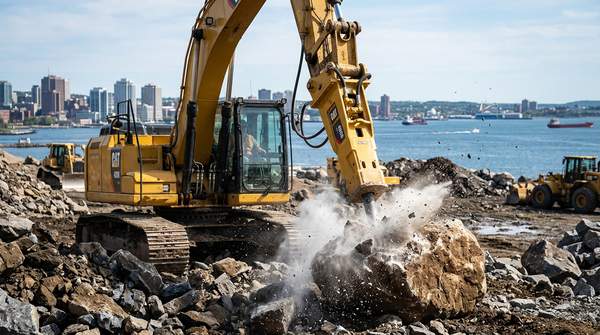
In Upstate New York, a project manager watches his crew stand idle. The hydraulic hammer attachment he bought at an online auction failed just two days into a critical concrete-breaking job, putting the entire project in jeopardy.
That delay will cost thousands in wages and equipment rental extensions, a painful scenario that highlights a simple truth in demolition: the price of equipment is nothing compared to the cost of downtime.
This focus on reliability is the foundation of EFI Demolition Equipment, a family-owned company in DeRuyter, NY. For over 35 years, they’ve made sure contractors get attachments that are ready to work the moment they arrive.
The True Cost of Hydraulic Hammer Downtime
While the sticker price of an excavator hammer attachment gets a lot of attention, experienced project managers know the real financial hit is measured in lost hours. When a hammer fails, the direct repair costs are just the beginning.
You have idle workers, stalled excavators, and potential late-completion penalties that create a cascade of expenses, quickly dwarfing what you paid for the tool. With the construction sector booming, these delays are more costly than ever.
This pressure is exactly why EFI Demolition Equipment built its business around a “100% Operational Readiness” guarantee. Their philosophy is straightforward: prevent downtime before it ever happens.
They rigorously inspect, service, and test every piece of new or used demolition equipment, turning each purchase into an investment in keeping the project moving. It all comes back to their core promise: “No Surprises, No Downtime, No Excuses.”
Critical Checks for a Hydraulic Hammer Before You Start a Job
Keeping heavy equipment running starts with a solid maintenance routine. Before any operation, a hydraulic breaker inspection is non-negotiable for both safety and efficiency. Contractors should build a daily habit of running through a few key checkpoints such as:
- Hoses and Fittings: Check for any leaks, abrasion, or cracking. A bad hydraulic line is one of the most common reasons for failure.
- Chisel/Tool Point: Inspect the tool for heavy wear, chips, or fractures. Make sure the retaining pins are secure and in good shape.
- Nitrogen Charge: This one requires specialized tools, but you need to regularly check that the accumulator's nitrogen pressure is within the manufacturer's specs. It’s crucial for maintaining impact power and preventing internal damage.
- Mounting Pins and Bushings: Look for any looseness or significant wear in the mounting bracket, pins, and bushings. A secure fit to the excavator is essential for performance and safety.
Running through this checklist daily is vital, but the real work should start long before the attachment ever gets to your site. At EFI Demolition Equipment, this pre-sale inspection is a core part of their service. They ensure every hydraulic hammer they sell meets strict criteria for being ready to work.
Is It Better to Buy a New or a Used Hydraulic Hammer?
Deciding between new and used equipment usually means balancing your budget with performance needs. A new hydraulic hammer gives you the latest technology and a full factory warranty, but the upfront cost can be steep.
For many contractors, a high-quality, reconditioned used hydraulic hammer from a reputable dealer is a much better value. The key word there is reputable. Buying used attachments from an unknown source is a gamble that can leave you with poorly maintained equipment and hidden problems.
That’s where a trusted partner like EFI Demolition Equipment changes the game. As a family-owned business running since 1990 with a BBB A+ accreditation, their reputation is built on the quality of their used inventory.
Every piece is thoroughly vetted to meet the same operational standards as their new equipment. This gives contractors a smart way to get a dependable concrete breaker for an excavator without the brand-new price tag.
The EFI Approach vs. The Regular Dealer
When you're looking for an excavator hammer attachment, the dealer's service model is just as important as the tool itself. The differences can make or break a project's success.
- Equipment Readiness: Many online sellers and auction houses sell equipment "as-is," leaving the inspection and repair work to the buyer. EFI’s model, however, is built on its 100% Operational Readiness guarantee. Every tool they deliver is ready for immediate, productive use.
- Compatibility & Fitment: An improperly mounted attachment is a frequent cause of failure. While other dealers might offer generic advice, EFI runs an on-site custom fabrication shop to create custom mounts and pins. They ensure a perfect, factory-spec fit for any excavator, including major brands like CAT, John Deere, and Komatsu.
- Support & Expertise: It's frustrating to navigate a complex phone tree just to talk to a generic sales rep. EFI offers a much better alternative: direct access to the owner. Customers can call Bob at 315-440-2762 and draw on his 35-plus years of hands-on industry experience for troubleshooting and advice.
- Inventory & Sourcing: Limited stock often means long wait times. With an inventory of over 3,500 items and strong sourcing capabilities, EFI can quickly find and provide even hard-to-find attachments to keep projects on track.
How Do I Know if a Hydraulic Hammer is Compatible with My Excavator?
Matching a demolition attachment to an excavator is a technical process. If you get it wrong, you risk catastrophic failure and serious safety hazards.
You have to match three main things: the excavator’s operating weight, its hydraulic oil flow rate in gallons per minute, and its system pressure (PSI). A hammer that's too big can damage the excavator's boom, while one that's too small will be inefficient. If the hydraulic flow or pressure is off, the hammer will perform poorly or overheat, leading to a much shorter lifespan.
This is where real expertise pays off. The team at EFI Demolition Equipment doesn’t just help contractors pick the right hydraulic hammer for their machine; they use their on-site custom fabrication shop to solve problems.
If a standard mount isn’t available or won’t work, they can engineer and build a custom one to guarantee the best performance and safety. That service is a lifeline for contractors who run mixed fleets or older machines.
Conclusion: The Value of Investing in Uptime
A new, heavy-duty hydraulic hammer can cost anywhere from a few thousand dollars to over $10,000, depending on the brand, size, and features. Used models can save you a lot of money, but the price varies widely based on condition and history. But if you only focus on the purchase price, you're missing the bigger picture of total ownership cost.
A cheaper, less reliable hammer that causes just one or two days of downtime on a major project can easily become the most expensive tool on the job site. EFI Demolition Equipment focuses on providing the best long-term value.
By guaranteeing every piece of equipment is ready to work, offering upfront pricing with no hidden fees, and providing financing options, they help contractors invest in uptime and predictability.
As the demolition and construction industries keep evolving, the basic need for powerful, reliable tools isn't going anywhere. We'll likely see more telematics and "smart" attachments, but the core challenge for contractors will always be maximizing uptime.
For over three decades, EFI Demolition Equipment has shown that the best way to do that is by combining expertly vetted equipment with deep, accessible expertise- a solid foundation for any successful project. Contact EFI Demolition Equipment today.