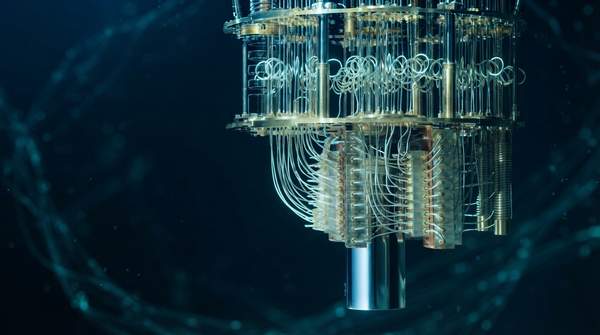
In 2020, Google integrated quantum computing into its popular Tensorflow platform, signaling a future where even complex machine learning models might soon leverage the bizarre rules of quantum mechanics. This development opened new avenues for researchers and engineers exploring advanced computational methods. The move aimed to provide tools for integrating quantum computing with AI for machine learning, accelerating exploration into novel algorithms by 2026.
Quantum Machine Learning promises to unlock unprecedented data analysis capabilities, but significant challenges in model trainability and practical implementation currently limit its widespread impact. The tension between theoretical potential and practical deployment impacts its immediate commercial viability.
While QML holds significant promise for specific data-intensive fields, its broad commercial adoption and the realization of true 'quantum advantage' are likely still years away, requiring continued research and infrastructure development. The industry must navigate substantial technical hurdles to harness this technology fully.
The release of Tensorflow Quantum by Google in 2020, as part of its widely adopted Tensorflow platform, underscored the serious potential companies see in integrating quantum principles with AI. Early industry adoption by a major tech player demonstrates a commitment to exploring new computational paradigms. Investments indicate a belief that quantum methods can enhance machine learning, despite the technology's early stages.
What is Quantum Machine Learning?
Quantum Machine Learning (QML) is an interdisciplinary field that merges quantum physics with machine learning to process information in novel ways. A comprehensive review of QML methods and applications highlights its focus on quantum neural networks and quantum deep learning, according to a comprehensive review of quantum machine learning. QML seeks to harness quantum phenomena, such as superposition and entanglement, to develop algorithms that can potentially outperform classical machine learning in certain tasks.
The approach represents a new frontier in AI, aiming to redefine how algorithms process information. By utilizing quantum bits, or qubits, QML can explore complex data relationships that are intractable for classical computers. These novel network architectures promise capabilities beyond current computational limits.
The Hybrid Approach: Quantum Augmenting AI
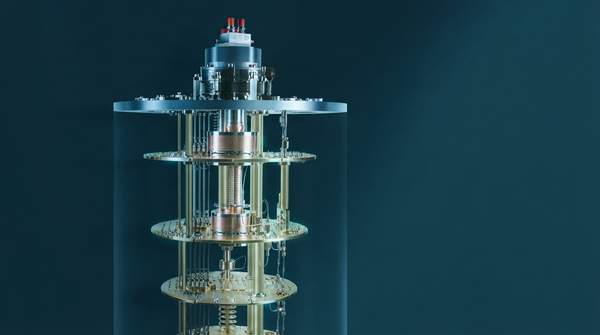
A specific mechanism for integrating quantum computing with AI involves a hybrid method, which leverages the strengths of both systems. This hybrid quantum-AI method processes data first with a quantum computer to identify stable statistical patterns, according to ScienceDirect. These identified patterns then guide the AI model training on a conventional supercomputer.
The model demonstrates that quantum computing can initially serve as a powerful pre-processor for classical AI. It optimizes data insights by extracting complex quantum correlations before conventional supercomputers handle the heavy lifting of model training. Companies betting on QML for immediate, purely quantum data analysis breakthroughs are miscalculating; the current reality shows that classical computing remains an indispensable partner for achieving any practical 'quantum advantage.'
Unlocking New Frontiers: The Promise of Quantum Advantage
Quantum Machine Learning holds the potential to accelerate data analysis, particularly for quantum data, according to Arxiv. The capability extends beyond merely speeding up existing tasks. It also opens opportunities for achieving quantum advantage with QML, as discussed in the same arxiv paper. Quantum advantage refers to the ability of a quantum computer to solve a problem significantly faster or more efficiently than any classical computer.
The true power of QML lies in its capacity to tackle problems intractable for classical computers. This offers a path to breakthroughs in fields dealing with inherently complex quantum data, such as materials science and drug discovery. It enables entirely new forms of analysis that were previously impossible, pushing the boundaries of scientific understanding and technological development.
Navigating the Hurdles: Challenges in QML Development
Despite the promise of quantum advantage, significant obstacles currently prevent QML from widespread adoption. Challenges remain in the trainability of QML models, as noted by arxiv. While the theoretical potential is high, practical implementation still grapples with core hurdles in making these models work effectively. Training quantum models requires overcoming issues like noise, error correction, and the inherent difficulty of optimizing complex quantum states.
Even with advanced platforms like Tensorflow Quantum, the core difficulty of getting quantum models to learn efficiently remains largely unsolved. Despite Google's early and significant investment in platforms like Tensorflow Quantum, The persistent 'challenges in the trainability of QML models' show that the industry is still far from a plug-and-play quantum AI. Core research, not just tooling, is the bottleneck preventing broader commercial impact.
Frequently Asked Questions About QML
What are the benefits of quantum AI in machine learning?
Quantum AI can offer significant benefits for specific computational tasks beyond classical capabilities. For example, it shows promise in tasks like quantum chemistry simulations, where the underlying data is inherently quantum mechanical. This allows for more accurate modeling of molecular interactions, crucial for drug discovery and materials science.
How does quantum computing enhance AI algorithms?
Quantum computing can enhance AI algorithms primarily through improved optimization and pattern recognition. By leveraging quantum principles, algorithms can potentially explore vast solution spaces more efficiently, leading to faster convergence for complex optimization problems. This can improve feature extraction in datasets, identifying subtle patterns that classical methods might miss.
What are the challenges of quantum machine learning?
Beyond model trainability, quantum machine learning faces significant hardware challenges. Current quantum computers are noisy and have limited qubit counts, making it difficult to run complex QML algorithms reliably. Scaling these machines while maintaining quantum coherence remains a major engineering hurdle for widespread adoption.
The Future is Hybrid: QML's Evolving Role
Quantum Machine Learning is not a distant dream but an active area of research and development, poised to redefine the boundaries of what's possible in data analysis. The most viable path to 'quantum advantage' in data analysis currently involves a hybrid approach, where quantum computers identify patterns for classical supercomputers to train AI models. A symbiotic, rather than purely quantum, future for QML is suggested.
QML's immediate impact is more likely to be in specialized domains like the analysis of quantum data itself, rather than a broad revolution in general data analysis. This is due to its inherent strengths and current limitations. Organizations that fail to understand or invest in QML risk being outpaced in advanced data analysis capabilities as the technology matures.
By 2026, companies like IBM and Google will likely continue to invest heavily in both quantum hardware and hybrid QML software development. Their progress will determine the pace at which these advanced capabilities transition from specialized research to broader industrial application, particularly within data-intensive sectors.