Boehringer Ingelheim to Establish London AI Center

Boehringer Ingelheim is committing £150 million over the next decade to establish a new artificial intelligence and machine learning center in London, aiming to staff it with 50 experts by 2027, accor

AM
Arjun Mehta

April 20, 2026 · 3 min read

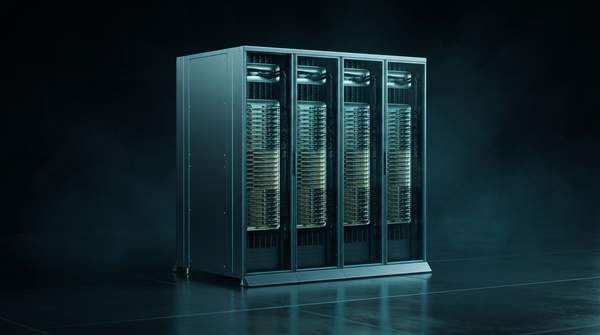
A sophisticated AI and machine learning center in London, showcasing advanced technology and pharmaceutical research with a backdrop of the city skyline.

Boehringer Ingelheim is committing £150 million over the next decade to establish a new artificial intelligence and machine learning center in London, aiming to staff it with 50 experts by 2027, according to Reuters and Pharmaceutical Technology. The £150 million, long-term financial commitment positions AI at the core of Boehringer Ingelheim's future drug discovery and development processes.

The investment, however, features initial staffing plans suggesting a measured, gradual integration of AI. The measured, gradual integration of AI differs from an immediate, large-scale disruption. The company anticipates an investment of £150 million over 10 years in AI across R&D, according to Endpoints News and pharmaphorum.

While the pharmaceutical industry increasingly embraces AI, companies like Boehringer Ingelheim are balancing ambitious long-term goals with practical realities of talent and integration. The balancing of ambitious long-term goals with practical realities of talent and integration suggests a phased transformation rather than an overnight revolution.

A New Hub in London's Knowledge Quarter

Boehringer Ingelheim is establishing its new AI and machine learning (ML) center in London's Knowledge Quarter, King’s Cross, aiming to staff it with 50 AI experts by the end of 2027, according to pharmaphorum, Endpoints News, and Pharmaceutical Technology. London's Knowledge Quarter, King’s Cross, leverages a key global tech talent hub. It provides direct access to a concentrated pool of AI expertise, central to the company's long-term AI strategy.

Leveraging AI for Advanced Drug Discovery

Boehringer Ingelheim is expanding its partnership with OpenProtein.AI to co-develop specialized antibody discovery and optimization workflows, according to biospace. The company also integrated results from several genome-wide association studies with whole-genome sequencing data, boosting the effects of rare variant analysis, according to nature. The expansion into advanced AI models and data integration directly addresses specific, high-value drug discovery bottlenecks. It enhances areas like antibody development and rare disease research through cutting-edge computational methods.

A Phased Approach to AI Integration

Boehringer Ingelheim plans to grow its AI team in the UK from four people to around 50 workers by 2027, Endpoints News reports. The gradual scaling of the AI team from four people to around 50 workers by 2027 signifies a deliberate, long-term integration strategy, contrasting with an immediate, disruptive overhaul of existing R&D processes. The measured pace of AI team growth, as reported by Endpoints News and Pharmaceutical Technology, could allow more agile competitors to capture early-mover advantages in broader AI-driven drug discovery. However, Boehringer Ingelheim's strategic location in London's Knowledge Quarter and expanded partnership with OpenProtein.AI suggest a hybrid model. Boehringer Ingelheim's strategic location in London's Knowledge Quarter and expanded partnership with OpenProtein.AI combine internal expertise with external specialized AI to accelerate specific, high-value drug discovery bottlenecks, rather than pursuing a full-scale in-house AI transformation.

Implications for the Pharmaceutical Landscape

The establishment of a new artificial intelligence and machine learning center in London positions Boehringer Ingelheim to potentially accelerate its pipeline and gain a competitive edge. It could pressure other pharmaceutical giants to intensify their own AI investments. Failing to do so risks falling behind in the rapidly evolving drug discovery field. Boehringer Ingelheim's distinct approach emphasizes sustainable, deeply integrated AI capabilities over rapid market entry, signaling a long-term vision. While other companies might pursue broader, undifferentiated AI adoption, this focus on enhancing specific, high-value drug discovery bottlenecks could yield targeted breakthroughs. By 2027, Boehringer Ingelheim's measured growth to 50 AI experts will clarify its competitive position against rivals pursuing faster AI expansion.

Frequently Asked Questions

What specific therapeutic areas will benefit most from Boehringer Ingelheim's AI center?

Boehringer Ingelheim's AI center will likely prioritize areas with significant unmet medical needs and complex biological targets, such as oncology, immunology, and cardiometabolic diseases. AI can accelerate the identification of novel drug candidates in these intricate fields.

What is the timeline for tangible drug discovery breakthroughs from this investment?

Tangible breakthroughs from the AI investment are likely to emerge over the medium to long term, potentially within three to five years. The initial focus on building internal expertise and refining AI models suggests early gains will accelerate preclinical stages rather than immediate clinical trial successes.

How might this AI integration impact pharmaceutical employment beyond the 50 new hires?

Beyond the 50 AI experts, the integration of AI could shift skill requirements across Boehringer Ingelheim's R&D teams. Existing researchers may need to develop new competencies in data science and computational biology, potentially creating new roles focused on AI-human collaboration in drug development.