Google will pay SpaceX $920 million every month for AI computing power, an annual sum exceeding $11 billion, according to The New York Times and Bloomberg. The massive payment of $920 million monthly highlights the immediate, extreme demand for AI infrastructure, even from tech giants.
Google operates one of the world's largest cloud platforms. Yet, its insatiable demand for AI compute now forces it to become a nearly billion-dollar-a-month customer of an external provider. This AI arms race creates unprecedented demand for specialized compute, compelling even the largest tech companies to forge unexpected, costly alliances for critical resources.
The Billion-Dollar-A-Month Commitment
SpaceX secured a $30 billion, multi-year deal to provide Google with AI computing power, priced at $920 million per month, according to The New York Times and CNBC. The $30 billion, multi-year deal and $920 million per month expenditure by Google on external AI compute reveals a critical GPU supply bottleneck, even for advanced cloud providers.
What Google Is Buying
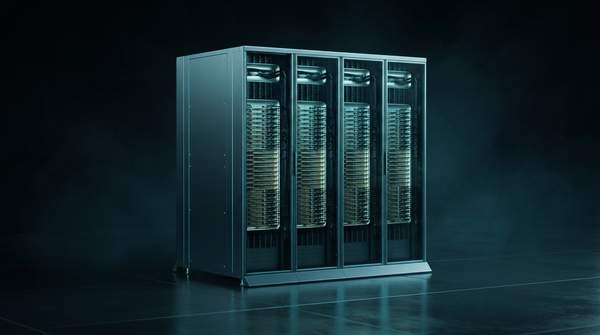
The agreement grants Google access to approximately 110,000 NVIDIA GPUs, CPUs, memory, and related components, according to TechCrunch. The scale of approximately 110,000 NVIDIA GPUs confirms the critical role of specialized hardware, particularly NVIDIA GPUs, in powering advanced AI models. Leasing 110,000 NVIDIA GPUs from SpaceX makes cutting-edge AI development prohibitively expensive, effectively creating an exclusive club of participants with multi-billion dollar infrastructure budgets.
Strategic Alliance in the AI Race
SpaceX entered a multi-year cloud services agreement with Alphabet's Google, according to Reuters and Virginia Business. The multi-year cloud services agreement represents Google's proactive strategy to secure essential AI infrastructure amidst intense competition. Despite being a global leader in cloud infrastructure, Google is effectively renting a massive private cloud of 110,000 NVIDIA GPUs from SpaceX, demonstrating that even hyperscalers cannot meet their internal AI compute demand and must rely on external specialized providers.