AI Satellites Fuel $25M BlackSky Deal Amidst Commercial Boom

A commercial satellite launched in March 2024 is now autonomously deciding where to point its instruments in orbit within 90 seconds, without any human input.

OH
Omar Haddad

April 24, 2026 · 5 min read

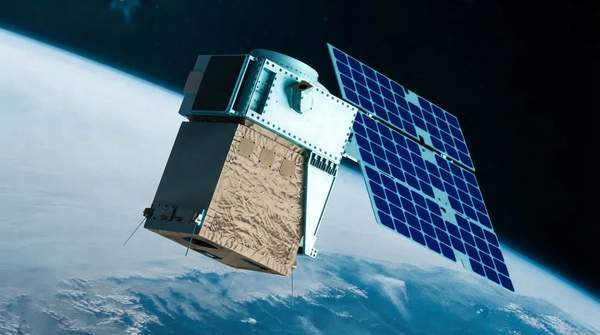
An advanced AI-powered satellite autonomously targeting Earth observation points in orbit, symbolizing the future of space-based intelligence and commercial boom.

A commercial satellite launched in March 2024 is now autonomously deciding where to point its instruments in orbit within 90 seconds, without any human input. This capability, part of NASA's Dynamic Targeting technology, allows Earth-observing satellites to independently determine optimal science observation points from orbit, marking a significant shift in space-based intelligence gathering. The first flight test for Dynamic Targeting occurred aboard the commercial satellite CogniSAT-6, which launched earlier this year.

Satellite intelligence capabilities are expanding rapidly with AI, but the speed and autonomy of these systems are outstripping traditional human review processes. The core tension lies in the fact that while governments scale their space-based intelligence, they are simultaneously adopting systems that operate with a speed and autonomy that inherently bypass traditional human oversight, creating a gap between intelligence acquisition and human review capacity.

Companies and governments are increasingly trading human oversight for speed and scale in space-based intelligence, a shift whose full implications are still emerging. This trade-off suggests a future where critical surveillance decisions are made by machines, potentially leading to intelligence gathering that operates beyond real-time human review.

The Growing Market for AI-Powered Eyes in the Sky

  • $25 million — BlackSky secured a multi-year contract for satellite imagery and analytics services, according to The Defense Post.
  • Next-generation AI surveillance satellites — The US government has hired BlackSky to develop these advanced systems, according to TechSpot.
  • Expanding demand — There is expanding demand for commercial satellite imaging and analytics in defense applications as governments scale space-based intelligence capabilities, as reported by The Defense Post.

Substantial investments highlight a strategic shift by governments towards leveraging commercial AI-powered satellite capabilities for intelligence. The US government's multi-year contracts with companies like BlackSky for AI-based analysis and high-resolution imagery signal a critical shift: national security is increasingly reliant on commercial AI systems making autonomous surveillance decisions, potentially trading human oversight for unprecedented speed and scale.


Unprecedented Detail and Autonomous Analysis

Metric2026 Capability
Imagery Resolution35 centimeters
AI-based AnalysisIntegrated with imagery
Constellation SizeFour satellites (Gen-3)

footnote: Data based on BlackSky's Gen-3 constellation capabilities and contract details, according to The Defense Post.

The Gen-3 satellite constellation, currently with four satellites, produces imagery with a resolution of about 35 centimeters, according to The Defense Post. This contract includes guaranteed access to high-resolution imagery and AI-based analysis tools. The combination of high-resolution imaging with integrated AI tools is creating a powerful, comprehensive surveillance and data interpretation platform. Commercial satellite systems like BlackSky's Gen-3 are not just providing high-resolution images; they are pairing them with AI analytics to autonomously interpret granular details like construction progress, transforming passive observation into active, automated intelligence generation for both defense and commercial applications.

Why Are AI Satellites Gaining Traction?

The rapid integration of AI into satellite technology is driven by the demand for faster, more granular intelligence, particularly in defense and commercial monitoring. Governments and private entities seek to overcome the limitations of human-centric review processes, which cannot keep pace with the volume and velocity of data generated by modern satellite constellations. The ability of AI to analyze vast datasets, identify patterns, and make autonomous decisions in near real-time offers a significant operational advantage.

This push for autonomy reflects a broader trend in defense intelligence, where the need for immediate situational awareness often outweighs the capacity for extensive human review. With commercial satellites like CogniSAT-6 autonomously deciding observation points within 90 seconds, the era of passive satellite monitoring is over. Companies and nations must now contend with an always-on, AI-driven eye in the sky that can proactively identify and track targets without human prompting, as described by NASA.

The Defense Post highlights the expanding demand for commercial satellite imaging and analytics in defense applications, implying a beneficial, controlled expansion of capabilities. However, NASA's description of Dynamic Targeting on CogniSAT-6 reveals that these commercial satellites can autonomously decide where to point instruments within 90 seconds without human involvement. This means that while governments are scaling space-based intelligence, they are simultaneously adopting systems that operate with a speed and autonomy that inherently bypass traditional human oversight, creating a gap between intelligence acquisition and human review capacity that requires careful consideration.

Beyond Defense: Commercial Applications Take Flight

Beyond military intelligence, commercial sectors are increasingly relying on satellite data to monitor complex projects and mitigate risks, revealing a wider adoption of space-based oversight. Satellite imagery is used to estimate construction progress by looking for milestones like land clearing and foundation work, according to Tom's Hardware. This granular observation allows for a new level of remote project management.

For example, several U.S. data centers slated for completion in 2026 are at risk of being delayed by more than three months, as analytics groups determined through satellite imagery, according to Tom's Hardware. AI-powered satellite monitoring provides early warnings for supply chain disruptions or labor shortages. Construction executives report that data center building sites are lacking specialist workers like electricians and pipe fitters, a fact that satellite imagery can help confirm or predict by tracking progress against projected timelines.

The integration of autonomous, AI-driven targeting, as demonstrated by NASA's Dynamic Targeting on commercial satellites, means that defense intelligence is increasingly relying on systems that make critical surveillance decisions without human intervention, potentially leading to intelligence gathering that operates beyond real-time human review. This extends to commercial applications, where companies can monitor global supply chains, track environmental changes, or assess disaster damage with a level of detail and speed previously unavailable. The shift towards AI-powered commercial satellites is transforming passive observation into active, automated intelligence generation for both defense and commercial applications.

What's Next for Autonomous Satellite Intelligence?

The future of space-based intelligence involves further decentralization of decision-making to AI systems on board satellites, accelerating data acquisition beyond human processing speeds.

  • NASA is testing Dynamic Targeting to enable Earth-observing satellites to autonomously decide where to best make science observations from orbit, as detailed by NASA.
  • The commercial satellite CogniSAT-6, launched in March 2024, conducted the first flight test for Dynamic Targeting.

The implication is that the volume and speed of intelligence derived from space will continue to grow exponentially, placing increased pressure on analysts to develop new methods for sifting through and validating AI-generated insights. Governments are increasingly outsourcing critical intelligence gathering to commercial AI satellite providers, indicating a strategic shift towards leveraging private sector innovation for rapid, autonomous surveillance capabilities, rather than solely relying on proprietary state-run systems. This trajectory suggests a future where the line between commercial and governmental intelligence blurs, with AI acting as the primary arbiter of what information is collected and when.

Key Takeaways

  • Commercial satellites like CogniSAT-6 can autonomously target observation points within 90 seconds, without human involvement, as of March 2024.
  • BlackSky secured a $25 million multi-year contract for AI-based satellite imagery and analytics services.
  • BlackSky's Gen-3 constellation can produce imagery with a resolution of 35 centimeters, enhancing granular detail for analysis.
  • Governments are increasingly relying on commercial AI systems for national security, potentially trading human oversight for speed and scale.

By 2026, BlackSky and similar commercial providers will deepen their integration into national security infrastructures, solidifying a reliance on autonomous AI systems for critical intelligence gathering.