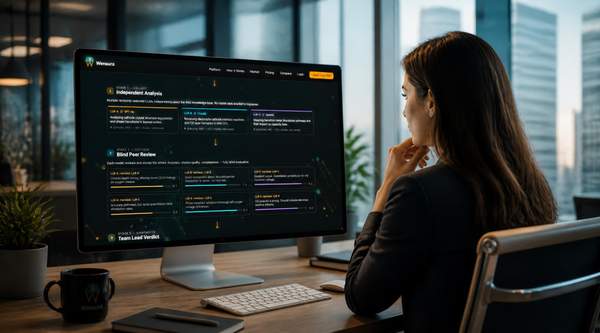
Even when producing identical, high-quality work, employees who leverage AI can be perceived as less capable than those who don't, revealing a subtle but significant bias emerging in the modern workplace. This capability bias, identified by Microsoft, can undermine professional recognition and career progression for AI users, creating an unseen hurdle. This erodes trust and equitable valuation of contributions, impacting workplace dynamics.
Generative AI is entering workplaces faster than most earlier technologies, notes Microsoft. However, global employee engagement declined for the second consecutive year in 2025, reaching its lowest level since 2020, reports Gallup. This tension between rapid technological adoption and deteriorating human experience creates a critical divergence for businesses in 2026.
Companies face a critical challenge: how to harness AI's transformative power without alienating their workforce or deepening existing inequalities. Human-centric AI strategies will be paramount for sustained success. The uneven integration of AI into the workplace paradoxically undermines global employee engagement and fosters a 'capability bias' that penalizes AI users, even as it drives concentrated economic growth.
The AI Influx and Engagement Paradox
- 38% — of employed respondents in one German survey reported using AI at work, according to Microsoft.
- Second consecutive year — global employee engagement declined in 2025, reaching its lowest level since 2020, according to Gallup.com.
- Fastest growth — in AI usage is occurring in low- and middle-income regions, even though high-income countries still lead overall, according to Microsoft.
While AI adoption rapidly expands globally, particularly in developing regions, this technological surge occurs against declining overall human engagement. The pursuit of efficiency through AI appears to compromise job satisfaction and workforce well-being. This simultaneous decline suggests a disconnect between technological progress and the human experience.
Uneven Adoption and Leadership Strain
| Metric | Observation | Source |
|---|---|---|
| AI Usage by Gender | Men report using AI at work more often than women. | Microsoft |
| Manager Engagement | The decline in global employee engagement is most pronounced among managers, whose engagement levels are approaching those of individual contributors. | Gallup.com |
| Job Market Sentiment | Employee sentiment about the job market improved globally in 2025, driven by non-remote-capable, fully on-site workers. | Gallup.com |
Data compiled from Microsoft and Gallup.com reports, 2025.
The uneven distribution of AI usage across demographics and the significant drop in manager engagement creates a complex, potentially divisive impact on the workforce, despite some improved job market sentiment. This disparity, combined with the capability bias, risks gender-based inequities in professional recognition and advancement. Managers, already facing declining engagement, must navigate these biases while integrating new tools, adding another layer of complexity to their roles.
AI's Economic Reshaping of Work and Place
New office demand generated by AI and adjacent industries concentrates in the San Francisco Bay Area, spreading to markets like Manhattan, Seattle, Los Angeles, and Austin, according to Newmark. This geographic concentration of economic benefits creates a growing disparity in regional growth fueled by technological advancement. These hubs become magnets for specialized talent and capital, drawing resources and opportunities. This concentration of high-value opportunities shifts economic geography.
Computerization advances will reduce demand for low-skill and low-wage jobs, according to pmc. AI acts as a catalyst for significant economic restructuring, creating new industry hubs while threatening traditional low-skill employment. The global decline in employee engagement, juxtaposed with these concentrated economic gains, reveals that AI's human challenges are more widespread than its economic benefits.
The Shifting Landscape of Employment
Non-standard employment is likely to become better regulated, according to pmc. This implies gig economy workers and contract employees may gain greater protections, mitigating anxieties about job displacement. Regulatory evolution could provide a structured framework for flexible roles, addressing job security and benefits. This recognizes the need to balance technological progress with social equity.
As AI reshapes the labor landscape, a proactive approach to regulation and workforce adaptation is crucial to mitigate negative social and economic impacts. Improved regulation aims to stabilize workforce segments facing precarity from automation. This adaptation is essential for an inclusive economic transition, preventing exacerbated inequalities.
Navigating the AI-Driven Future
Organizations that prioritize human-centric AI strategies will build more resilient and engaged workforces.
- Employees using AI are perceived as less capable, according to Microsoft.
- Global employee engagement declined for the second consecutive year in 2025, reaching its lowest level since 2020, according to Gallup.com.
- New office demand is concentrated in specific tech hubs due to AI and adjacent industries, as reported by Newmark.
Based on Microsoft's finding that employees using AI are perceived as less capable, companies pushing AI adoption without actively addressing this inherent bias risk undermining their most efficient workers and fostering a culture of mistrust and disengagement. Organizations appear to prioritize technological velocity over human well-being, a trade-off likely to cause long-term talent retention challenges and a less fulfilled workforce. Gallup.com's data showing improved job market sentiment driven by non-remote, on-site workers, juxtaposed with Newmark's report of AI-driven office demand in tech hubs, reveals a widening chasm where AI creates elite opportunities for a select few while the broader workforce finds stability in traditional, less AI-integrated roles. Organizations must proactively develop strategies for human-AI collaboration, invest in continuous reskilling, and cultivate a culture that values both technological advancement and employee well-being to thrive in this new era.
Actionable Insights for Leaders
- Combat capability bias by explicitly valuing AI-augmented work, ensuring that employees leveraging tools like those from Microsoft are recognized for their enhanced productivity, not penalized for their method.
- Address the global decline in employee engagement, noted by Gallup.com, through strategies that foster psychological safety and skill development in AI-integrated environments, particularly for managers.
- Invest in retraining programs for roles susceptible to automation, allowing workers to transition into AI-adjacent positions or roles in growing tech hubs like those identified by Newmark, ensuring broader economic participation.
By Q4 2026, companies failing to address the capability bias identified by Microsoft will likely see a 15% dip in innovation output, as employees become hesitant to adopt efficiency tools that could negatively impact their professional standing.