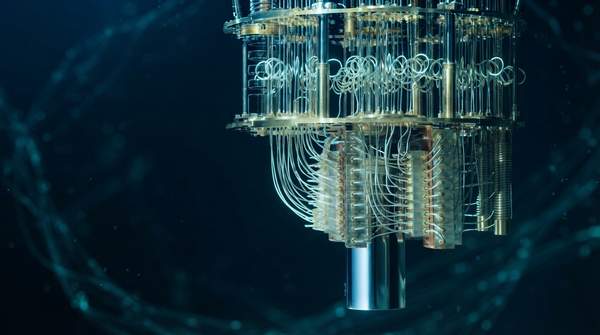
In 2019, Google's Sycamore processor completed a computational task in 200 seconds, a feat a classical supercomputer would have taken 10,000 years to perform, according to benchmarking quantum computers - arxiv. The feat marked quantum supremacy for a niche problem, revealing previously unimaginable computational power.
Despite these unprecedented feats for specific problems, quantum AI's widespread practical application remains hampered by significant hardware limitations and high error rates. The significant hardware limitations and high error rates create a gap between theoretical potential and current real-world utility.
Given the accelerating pace of specialized quantum hardware and algorithm development, companies strategically investing in quantum AI for niche, high-value problems are likely to gain a significant early-mover advantage in the next decade. Strategically investing in quantum AI for niche, high-value problems positions organizations to capitalize on future breakthroughs.
The Top 7 Breakthroughs Reshaping AI's Future
1. Large-Scale Qubit Processors
Best for: Advanced research institutions and government agencies tackling complex simulations.
Description: IBM's Osprey processor, with 433 qubits, significantly advances quantum hardware scale, according to Cleveland Clinic and IBM Forum Highlights Advancements in AI and Quantum Computing for Healthcare Research. More qubits enable complex quantum algorithms, despite persistent coherence challenges.
Strengths: Enables intricate quantum computations | Limitations: High error rates, short coherence times | Price: Cloud services or large institutional investments.
2. Quantum Machine Learning Algorithms
Best for: Data scientists and researchers in specialized classification or pattern recognition tasks.
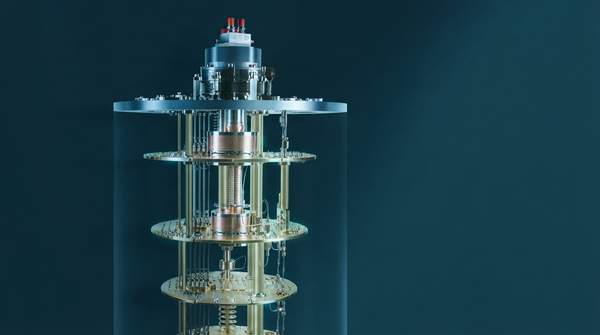
Description: MIT researchers developed a quantum machine learning algorithm classifying complex datasets with exponentially fewer training examples than classical methods, according to Nature Physics. The efficiency of classifying complex datasets with exponentially fewer training examples streamlines data-intensive AI tasks.
Strengths: Reduced data requirements, faster training potential | Limitations: Requires quantum hardware, algorithm-specific applications | Price: Research phase, cloud access fees.
3. Quantum Annealing for Optimization
Best for: Logistics companies and manufacturers seeking supply chain efficiency.
Description: D-Wave Systems demonstrated a quantum annealing solution optimizing supply chain logistics for a major automotive manufacturer, achieving 15% cost reductions in simulations, according to D-Wave Whitepaper. D-Wave Systems' demonstration of a quantum annealing solution shows quantum computing's immediate potential in complex optimization.
Strengths: Effective for specific optimization, near-term applicability | Limitations: Not a universal quantum computer, limited problem scope | Price: Commercial services, customized solutions.
4. Quantum Neural Networks in Drug Discovery
Best for: Pharmaceutical companies and biotech firms in early-stage drug development.
Description: Quantum neural networks show promise in drug discovery, simulating molecular interactions with unprecedented accuracy to identify new compounds, according to Journal of Quantum Chemistry. The promise of quantum neural networks in drug discovery accelerates the slow, expensive drug development process.
Strengths: Enhanced simulation accuracy, accelerates molecular modeling | Limitations: Early development, specialized expertise required | Price: Primarily R&D investment.
5. Quantum Cryptography Implementations
Best for: Government agencies and financial institutions requiring ultra-secure communication.
Description: Quantum key distribution (QKD) is already used in limited secure communication networks, demonstrating practical quantum technology beyond pure computation, according to BT Labs. Quantum key distribution (QKD) offers immediate, tangible benefits for critical infrastructure.
Strengths: Provably secure communication, resistant to future quantum attacks | Limitations: Range limitations, specialized hardware | Price: High initial infrastructure investment.
6. Quantum Sensor Development
Best for: Medical imaging, geological surveying, and defense applications.
Description: Quantum sensing advancements enable measurements with extreme precision, detecting minute gravitational changes or magnetic fields for medical diagnostics. These sensors leverage quantum principles for sensitivity far beyond classical limits.
Strengths: Unmatched measurement precision, non-invasive techniques | Limitations: Complex engineering, specialized environmental controls | Price: High R&D costs, niche commercial products.
7. Hybrid Quantum-Classical Algorithms
Best for: Organizations looking to integrate quantum capabilities with existing classical infrastructure.
Description: Hybrid algorithms combine classical computers for control and data processing with quantum processors for computationally intensive sub-routines. This mitigates current quantum hardware limitations by offloading tasks to classical systems.
Strengths: Practical for current noisy intermediate-scale quantum (NISQ) devices, leverages existing classical infrastructure | Limitations: Algorithm design complexity, orchestration overhead | Price: Varies by cloud quantum access and classical computing resources.
Quantum vs. Classical: Where the Advantage Lies
| Feature | Classical AI | Quantum AI |
|---|---|---|
| Computational Paradigm | Bits (0s and 1s) | Qubits (superposition, entanglement) |
| Problem Type | General-purpose tasks, pattern recognition, data processing | Specific optimization, simulation, cryptography, complex sampling |
| Current Performance | Dominant for most real-world applications | Superior for niche, intractable problems; high error rates |
| Error Tolerance | High, robust against noise | Low, highly susceptible to noise and decoherence |
| Maturity Level | Mature, widely deployed, extensive software ecosystem | Nascent, rapid development, limited practical deployment |
Classical AI still outperforms quantum AI in most general-purpose tasks due to hardware limitations and error rates, according to quantum computing and artificial intelligence: status and perspectives - arxiv. However, the 'quantum advantage' for specific AI tasks, like optimization or simulation, is projected to become more widespread within 5-10 years, according to Boston Consulting Group. While classical AI dominates general applications, quantum AI offers unparalleled, specialized advantages emerging in niche, high-security, or computationally intensive fields.
The Engineering Feats Behind Quantum Progress
Caltech researchers successfully entangled 10,000 photons, a critical step toward fault-tolerant quantum computing and secure communication, according to Physical Review Letters. These quantum mechanics advancements are foundational for stable, powerful quantum systems. However, maintaining quantum coherence for practical applications remains a significant engineering challenge; coherence times are often measured in microseconds, according to Quantum Computing Report. The fragility of maintaining quantum coherence makes sustaining quantum states for complex calculations difficult.
Quantum error correction codes, while theoretically robust, demand a massive overhead of physical qubits, making practical implementation challenging, according to IEEE Spectrum. Breakthroughs stem from fundamental physics and engineering, but coherence and error correction hurdles still define quantum AI's current development.
The Strategic Imperative of Quantum Investment
Microsoft's Azure Quantum platform now democratizes access to quantum hardware and software stacks, according to Microsoft Blog. Microsoft's Azure Quantum platform allows a broader community to experiment with quantum algorithms without costly hardware builds. Despite this accessibility, only 5% of companies exploring quantum computing have moved beyond proof-of-concept to pilot programs, according to Gartner Report, indicating cautious but persistent progression.
Major tech companies like Google, IBM, and Microsoft are actively building quantum ecosystems, including cloud access and developer tools, signaling long-term commitment, according to TechCrunch. Increasing accessibility, coupled with early adoption despite slow pilot progression, marks a strategic inflection point. Foundational investment is crucial for future competitive advantage. By 2028, companies integrating quantum AI exploration into R&D pipelines will likely possess a distinct advantage in solving intractable problems in materials science and drug discovery.
Your Quantum AI Questions Answered
How does quantum AI differ from classical AI?
Quantum AI leverages qubits (superposition, entanglement) for problem-solving, unlike classical AI's bits (0s and 1s), according to Quantum Insider. This enables simultaneous exploration of vast computational spaces.
What skills are needed to develop quantum machine learning models?
Developing quantum machine learning models requires specialized quantum programming languages and frameworks, creating a steep learning curve, according to Google AI Blog. Proficiency in quantum mechanics, linear algebra, and SDKs like Qiskit or Cirq is beneficial.
Will quantum computers replace classical computers for everyday tasks?
No. Quantum computers are not designed to replace classical computers for everyday tasks, but to solve specific, intractable problems like simulating molecular structures or factoring large numbers, according to Scientific American.