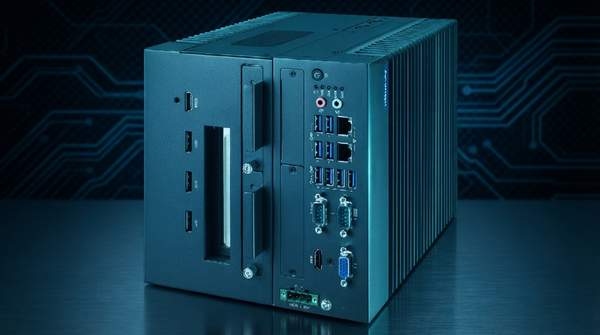
On May 4, 2016, IBM made its first quantum processor available over the internet. The pivotal move of May 4, 2016, launched an era where over 300 organizations now run experiments on real quantum hardware, accelerating the technology's evolution and allowing global researchers and businesses to engage directly with advanced computational power.
Quantum computing remains a highly complex, specialized field. Yet, IBM has made it widely accessible to a global network, accelerating its development and bridging the gap between theory and practical application.
IBM's aggressive expansion of hardware, infrastructure, and research partnerships positions it to lead the charge. The company appears likely to make quantum computing a practical tool for a growing number of real-world problems.
IBM's Quantum Dominance Today
IBM operates the world's largest fleet of quantum systems, making it a de facto leader in the emerging tech sector, according to Time Magazine. Over 300 companies, universities, and research labs access these systems via the cloud. The Poughkeepsie facility alone hosts the world's highest number of utility-scale quantum computers at a single location, as reported by The Quantum Insider. The unparalleled global infrastructure and user base provides a substantial advantage in feedback and development, solidifying IBM's operational leadership.
Accelerating Performance and Infrastructure
IBM has reported experimental chips exceeding 1,100 qubits, pushing theoretical limits, according to The Quantum Insider. Yet, a substantial gap remains between these research capabilities and production processors available for widespread use.
Still, IBM's Heron-based system delivers up to a 16-fold performance improvement and a 25-fold speed increase over previous IBM quantum computers, as measured in 2022 by The Quantum Insider. The 16-fold performance improvement and 25-fold speed increase mark rapid progress in practical quantum computation.
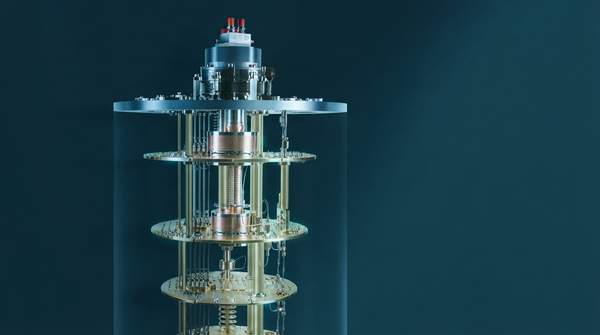
IBM also expanded its quantum data center in Poughkeepsie, New York, enhancing its physical infrastructure. IBM's aggressive pursuit scales both raw computational power and the infrastructure needed for future quantum applications.
A Decade of Democratizing Quantum
IBM's early and aggressive push for cloud accessibility, starting May 4, 2016, democratized quantum computing. IBM's early and aggressive push for cloud accessibility created an unparalleled feedback loop, positioning IBM to define industry standards and accelerate practical applications beyond competitors. For instance, IBM researchers used a quantum machine to synthesize a novel carbon-based molecule, as reported by Time Magazine. The synthesis of a novel carbon-based molecule moves quantum computing beyond theoretical pursuits. By scaling hardware and establishing research hubs, IBM builds a significant competitive moat, betting quantum computing will redefine scientific and mathematical problem-solving.
Forging Future Frontiers in Research and Delivery
IBM is launching the FutureNow Chicago delivery center at the Illinois Quantum and Microelectronics Park (IQMP), expanding its physical footprint, according to Quantum Computing Report. Concurrently, its academic partnership transitions into the new MIT-IBM Computing Research Lab.
The MIT-IBM Computing Research Lab will rethink the mathematical foundations of machine learning, Hamiltonian simulations, and partial differential equations. The MIT-IBM Computing Research Lab's strategic investment pushes theoretical and practical boundaries.
If IBM maintains this dual focus on advanced research and expanding delivery centers, it appears likely to sustain its leadership, pushing quantum computing toward widespread practical application.
Understanding IBM's Latest Processors
What are the latest advancements in IBM quantum computing?
IBM continues to advance its processor technology. The Nighthawk processor, for example, features 120 qubits in its first version (r1), released December 2025, according to quantum. These improvements focus on increasing qubit count and stability for practical applications.
How can I access IBM's quantum computing cloud?
Access to IBM's quantum computing cloud is available via its Qiskit platform, providing open-source tools. Users connect to IBM's global network, including the 156-qubit Heron processor, upgraded July 2025 (r3) with manufacturing improvements, as reported by quantum.
What are the benefits of IBM's quantum cloud services?
IBM's quantum cloud services offer global access to real quantum hardware, removing the need for specialized on-site equipment. The platform provides a consistent environment for experiments, algorithm development, and collaboration. The Heron processor, upgraded July 2025 (r3), exemplifies continuous improvements available to cloud users, supporting advanced research.