How AI Analyzes Data To Transform Supply Chain Logistics

AI adoption in supply chains has already reduced fulfillment costs by 23% on average and improved forecast accuracy by up to 85%, according to Capgemini Research .

HS
Helena Strauss

April 19, 2026 · 5 min read

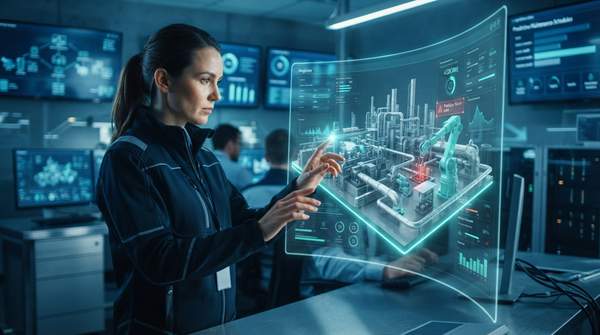
A futuristic AI network visualizing global supply chain logistics, showing data flow and interconnected nodes for warehouses, shipping, and deliveries.

AI adoption in supply chains has already reduced fulfillment costs by 23% on average and improved forecast accuracy by up to 85%, according to Capgemini Research. 23% reduced fulfillment costs and up to 85% improved forecast accuracy underscore artificial intelligence's immediate impact on operational efficiency and predictive capabilities in supply chain logistics. Companies integrating these technologies realize tangible financial and strategic benefits.

Historically, supply chains relied on rigid, human-managed processes, often struggling with unforeseen disruptions. However, artificial intelligence now enables flexible, self-learning networks that independently adapt to emerging problems, fundamentally altering traditional control structures. This dichotomy between established methods and emerging autonomous systems defines the current state of supply chain management.

Companies increasingly trade traditional control for AI-driven autonomy. Those embracing this shift will gain a significant competitive edge in an unpredictable global market. This transition is not merely an upgrade; it is a prerequisite for resilience and sustained growth.

The AI-Powered Supply Chain: A New Era of Intelligence

AI helps supply chain teams detect exceptions using machine learning and pattern recognition, predict changes in demand, supply, and lead time, and recommend or automate actions across sourcing, production, inventory, and logistics, states Kinaxis. This capability extends beyond simple automation to proactive problem identification and resolution. AI solutions enable automatic monitoring and learning in supply chains, replacing rigid organizations with flexible networks that leverage self-learning algorithms, according to PMC. The combined effect is a supply chain that anticipates and mitigates issues before they escalate.

AI functions as a foundational technology that redefines how supply chains operate, making them inherently more adaptive and resilient. AI helps to better manage and bring order to supply chains, observes Deloitte. AI empowers businesses to respond with agility to market fluctuations and unexpected events, transforming reactive operations into proactive strategies.

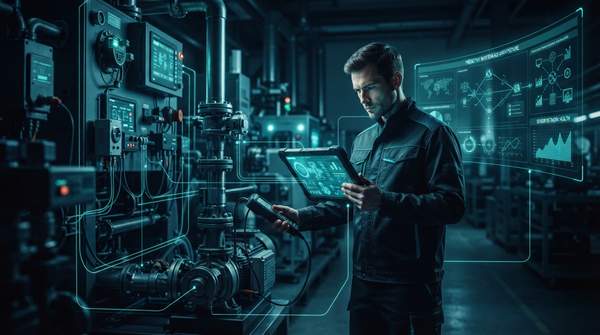
Integrating disparate external data sources, such as weather patterns, social media trends, and regional events, with internal sales history, allows AI to achieve demand forecast accuracy improvements up to 85%. Traditional models, limited to internal data, could never achieve this level of precision. This comprehensive data analysis transforms supply chain planning from an educated guess into a data-driven science, offering a distinct competitive advantage.

How AI Transforms Key Supply Chain Functions

AI tools analyze internal and external data, such as market trends, weather patterns, and supplier performance, to forecast demand and risk, reports Business. This analysis provides a more complete picture than human analysts can typically process. Machine learning models predict demand by analyzing internal sales history along with external signals like regional events and social media trends, as detailed by Business.com, leading to more robust and accurate predictions.

Furthermore, machine learning models dynamically adjust routing and transportation plans by factoring in traffic patterns, weather, and fuel costs, according to Business.com. This real-time optimization minimizes delays and reduces operational expenses. AI's capacity for dynamic, real-time adjustments significantly outperforms static, human-managed logistics, ensuring optimal resource allocation.

Based on Capgemini Research's findings of up to 85% improved forecast accuracy and 23% reduced fulfillment costs, companies clinging to traditional, human-driven forecasting models are not merely falling behind, but actively incurring measurable competitive and financial penalties. The reliance on static, historical data without incorporating dynamic external factors leads to inefficiencies that directly impact profitability and market position.

Navigating the Challenges of AI Integration

AI independently develops solutions to emerging problems based on dynamic models and learns from accumulated data, according to PMC. AI's independent development of solutions to emerging problems extends beyond mere optimization to autonomous problem-solving. AI's independent problem-solving suggests a more significant shift towards autonomous systems that could diminish, rather than merely augment, the scope of human decision-making and control in critical areas, differing from Deloitte's view that AI will primarily augment human roles. The divergence in perspective highlights a key tension in AI adoption strategies.

While AI's autonomous problem-solving is powerful, it also introduces the challenge of 'black box' decision-making. Here, the system's independent learning might outpace human comprehension or control, requiring robust governance. Understanding how AI arrives at its conclusions becomes crucial for trust and accountability, especially in high-stakes operational environments where transparency is paramount.

The evidence from PMC, highlighting AI's capacity to 'independently develop solutions to emerging problems,' indicates that organizations failing to integrate self-learning AI are not just missing out on efficiency gains, but are fundamentally unprepared for the dynamic, unpredictable nature of modern global supply chains. Relying solely on human-centric processes leaves businesses vulnerable to rapid shifts in demand, supply, or external disruptions, exposing them to avoidable risks.

Strategies for Successful AI Adoption

Tens of millions of people are apt to hold jobs in which their roles will be augmented by AI, states Deloitte. The augmentation of tens of millions of jobs by AI necessitates a focus on collaboration rather than outright replacement. Successful AI integration requires a proactive strategy that prioritizes upskilling the workforce to interact with and manage these advanced systems, ensuring human oversight and leveraging augmented intelligence rather than simply automating tasks. Successful AI integration involves training employees to interpret AI outputs, troubleshoot issues, and make strategic decisions informed by AI insights, fostering a symbiotic relationship between human and machine intelligence.

Implementing AI also demands a clear understanding of data quality and availability. Poor data inputs will lead to flawed AI outputs, undermining the system's effectiveness. Organizations must invest in data governance and cleansing processes to maximize the value derived from their AI initiatives, recognizing that AI's intelligence is only as good as the data it consumes.

Common Questions About AI in Supply Chains

What types of AI are used in supply chain management?

Supply chain management utilizes various AI types, including machine learning for predictive analytics and natural language processing (NLP) for qualitative data analysis. Generative AI and NLP tools process quantitative and qualitative supplier data to assess risk, capacity, and performance, according to Business.com.

How does AI process complex supply chain data?

AI processes complex supply chain data by employing advanced algorithms to identify patterns, correlations, and anomalies across vast datasets. It integrates internal operational data with external factors like market trends and geopolitical events to create comprehensive, dynamic models for decision-making.

What are the primary benefits of AI in supply chain management?

The primary benefits of AI in supply chain management include significantly improved demand forecast accuracy, reduced fulfillment costs, and enhanced resilience against disruptions. AI enables autonomous monitoring and learning, allowing supply chains to adapt in real-time and mitigate risks proactively.

The Future is Intelligent: Beyond the Factory Floor

The integration of AI is expected to increase performance on various business and production indicators within the supply chain, with impacts extending beyond the factory floor, states PMC. The broad influence of AI's integration indicates that AI's capabilities will reshape entire organizational structures and competitive strategies, moving beyond mere logistical improvements to fundamental business model transformation.

By Q4 2026, a major retailer like GlobalConnect could face increased inventory holding costs by an estimated 15% if it fails to implement AI-driven demand forecasting, demonstrating the direct financial penalties of inaction. The scenario of a major retailer like GlobalConnect facing increased inventory holding costs by an estimated 15% by Q4 2026 if it fails to implement AI-driven demand forecasting highlights the urgent need for strategic AI adoption to remain competitive.